Lines and symbols on the road surface. Every sign with its number, picture and explanation. Pick a group or search for a sign by name.
 Road markings25
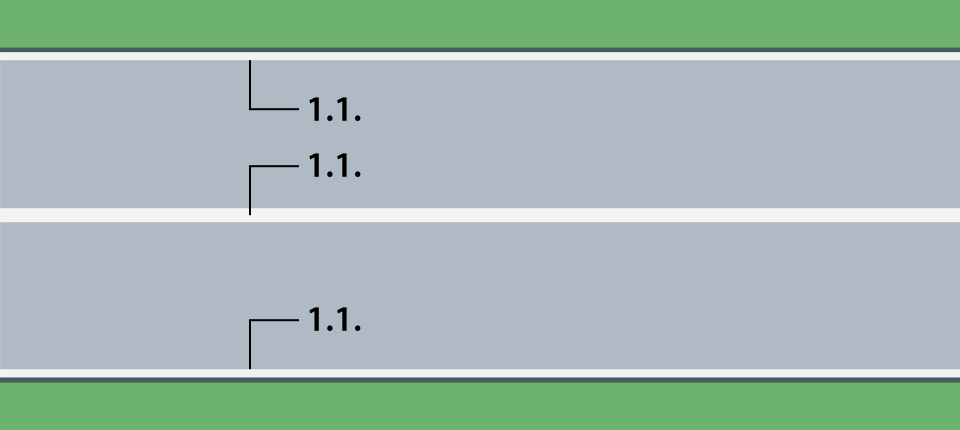
Separates traffic flows moving in opposite directions and marks the boundaries of traffic lanes on dangerous sections; marks the boundaries of the carriageway where entry is prohibited; marks the boundaries of vehicle parking places and the edges of the carriageway on roads that, by traffic conditions, are not classed as motorways. Crossing line 1.1 is prohibited. Crossing line 1.1 that marks the edge of the carriageway and lies on the driver's right is allowed in order to stop the vehicle at the side of the road.
Translated from the official Georgian text.
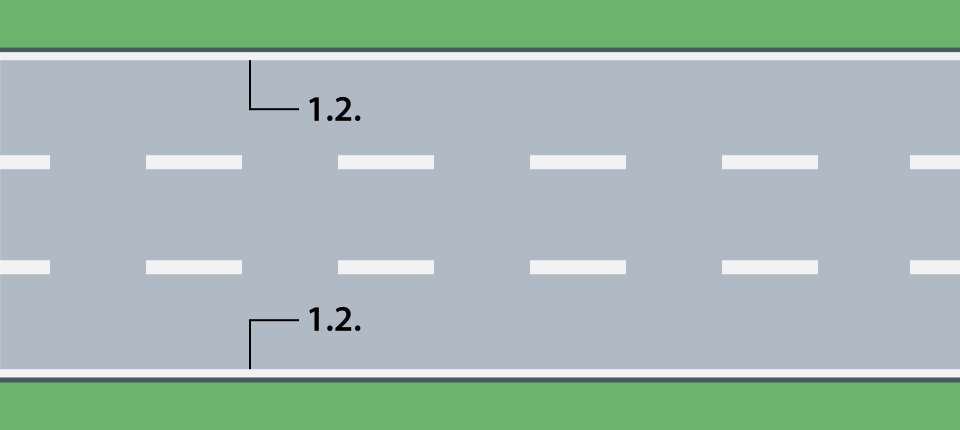
A wide solid line marks the edges of the carriageway on a motorway. Crossing line 1.2 is allowed in order to stop the vehicle at the side of the road.
Translated from the official Georgian text.
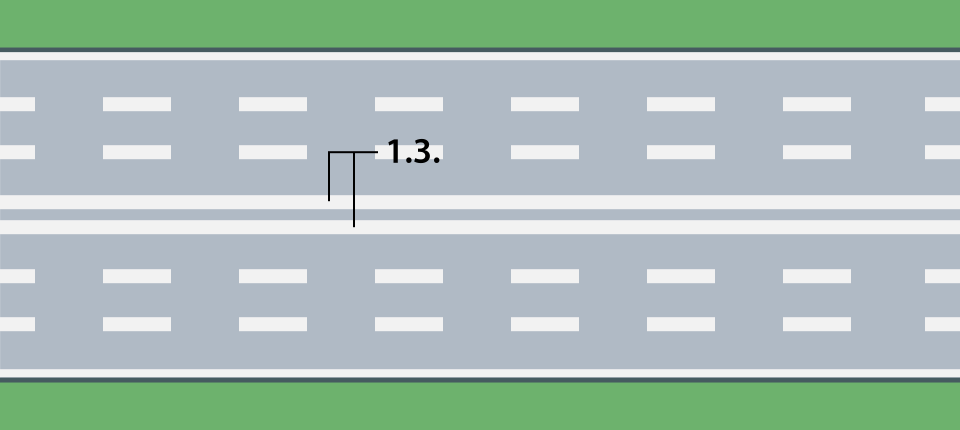
Separates traffic flows moving in opposite directions on roads with four or more traffic lanes. Crossing line 1.3 is prohibited.
Translated from the official Georgian text.
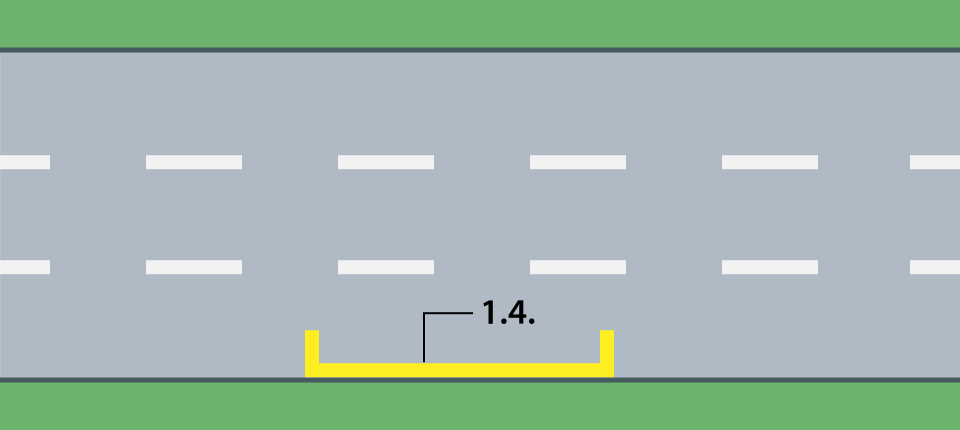
Marks a place where stopping is prohibited; it is used on its own or in combination with sign 3.27; it is painted along the edge of the carriageway or on top of the kerb.
Translated from the official Georgian text.
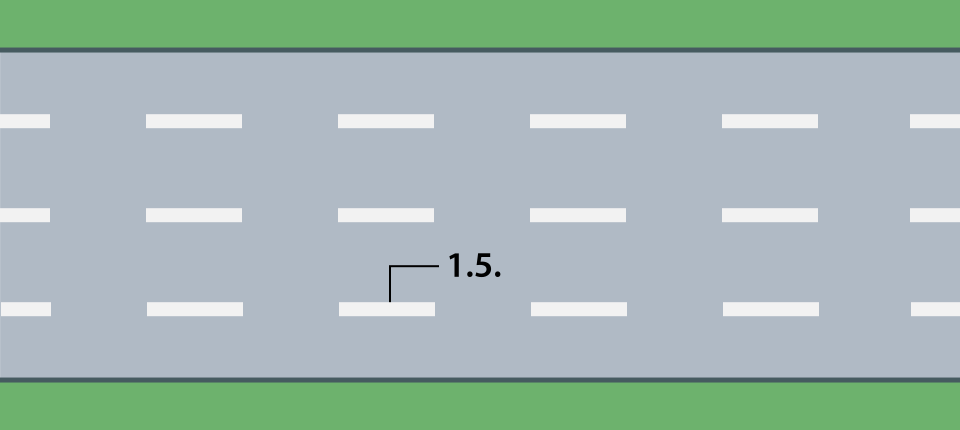
Separates traffic flows moving in opposite directions on roads with two or three traffic lanes; marks the boundaries of traffic lanes when there are two or more lanes intended for traffic in one direction. Crossing line 1.5 is allowed from either side.
Translated from the official Georgian text.
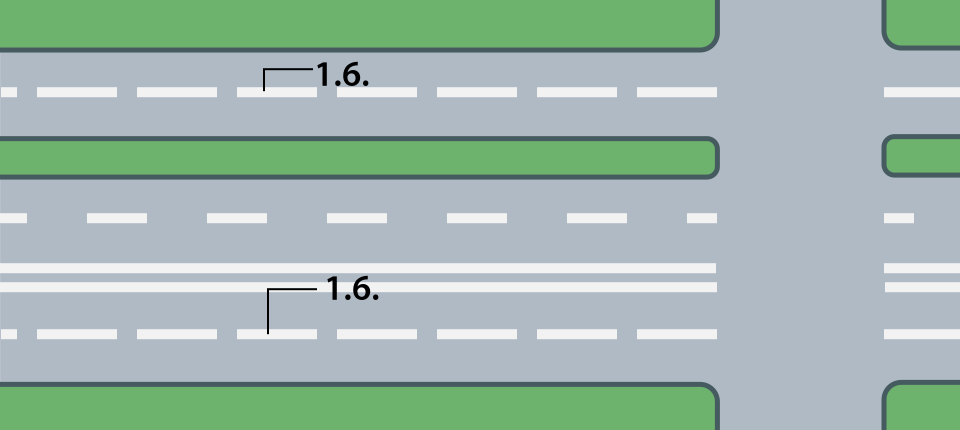
Approach line (a broken line whose dashes are three times longer than the gaps between them) warns of approaching marking 1.1 or 1.11 that separates traffic flows moving in opposite or the same directions. Crossing line 1.6 is allowed from either side.
Translated from the official Georgian text.
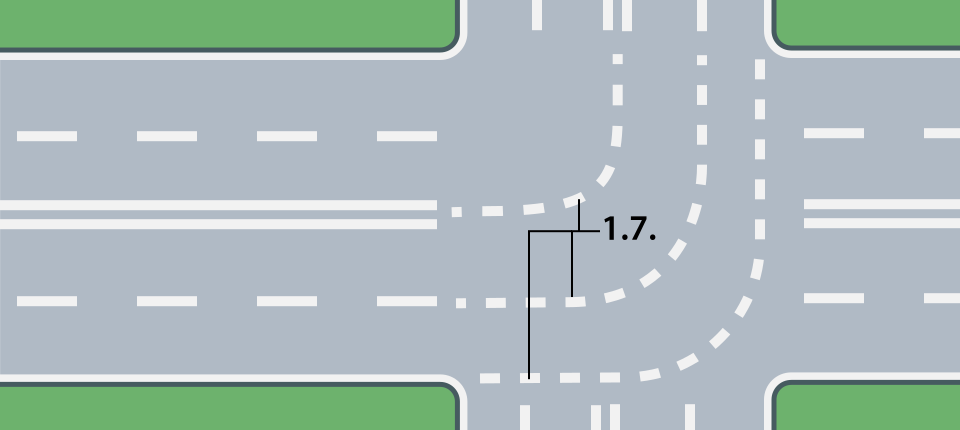
A broken line with short dashes and gaps of the same length marks traffic lanes within an intersection. Crossing line 1.7 is allowed from either side.
Translated from the official Georgian text.
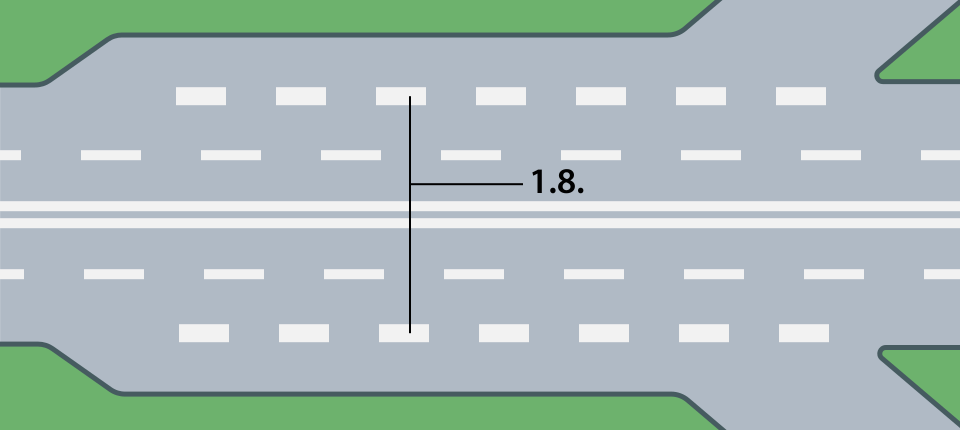
Wide broken line: marks the boundary between acceleration or deceleration lanes and the main lane of the carriageway (at intersections, at grade-separated junctions, at bus stop areas, etc.). Crossing line 1.8 is allowed from either side.
Translated from the official Georgian text.
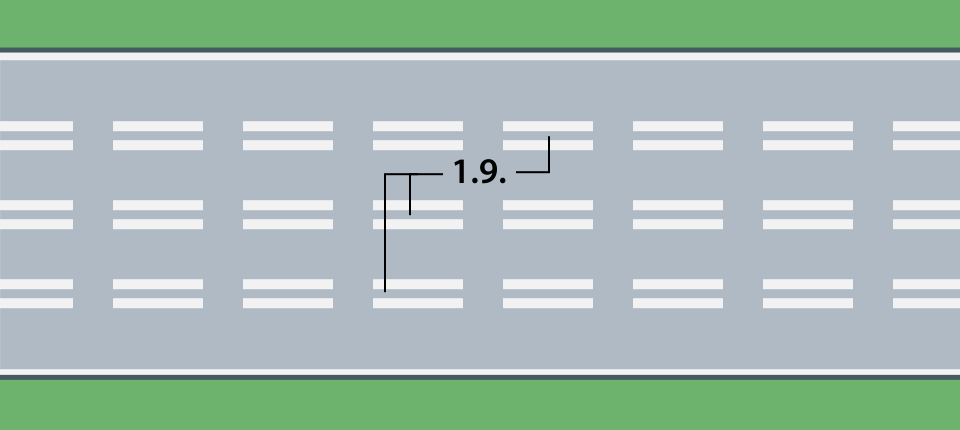
Marks the boundaries of traffic lanes with reversible traffic control; separates traffic flows moving in opposite directions (when the reversible traffic lights are switched off) on roads with reversible traffic control.
Translated from the official Georgian text.
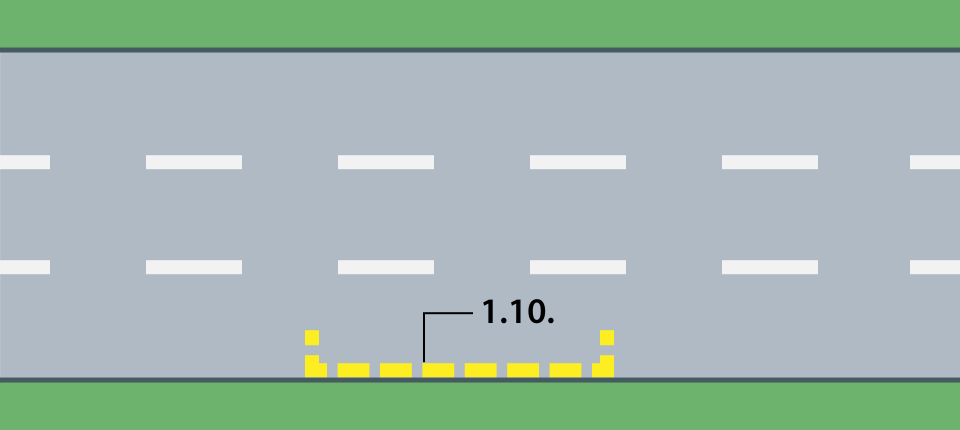
Marks a place where parking is prohibited; it is used on its own or in combination with sign 3.28; it is painted along the edge of the carriageway or on top of the kerb.
Translated from the official Georgian text.
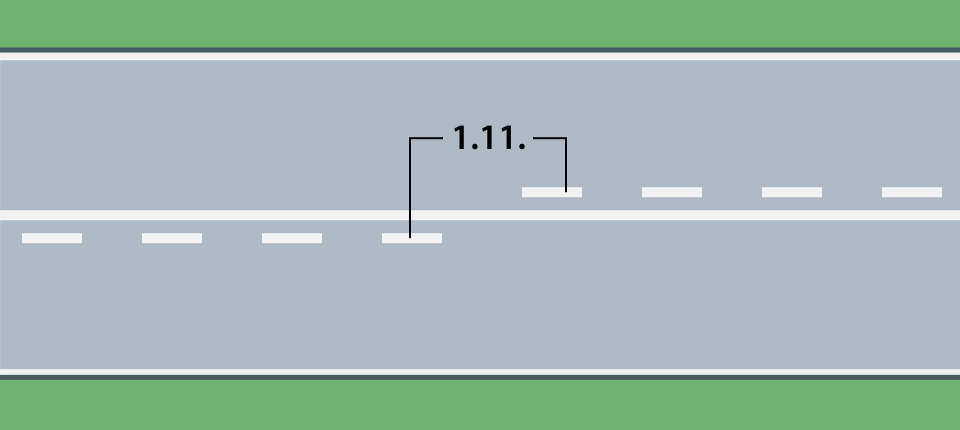
Separates traffic flows moving in opposite or the same directions on a section of road where changing lanes is allowed from one lane only; marks turning places, exits from and entrances to parking areas, etc., where movement is allowed in one direction only. Crossing line 1.11 is allowed from the broken-line side, and also from the solid-line side, but only when completing overtaking or passing around.
Translated from the official Georgian text.
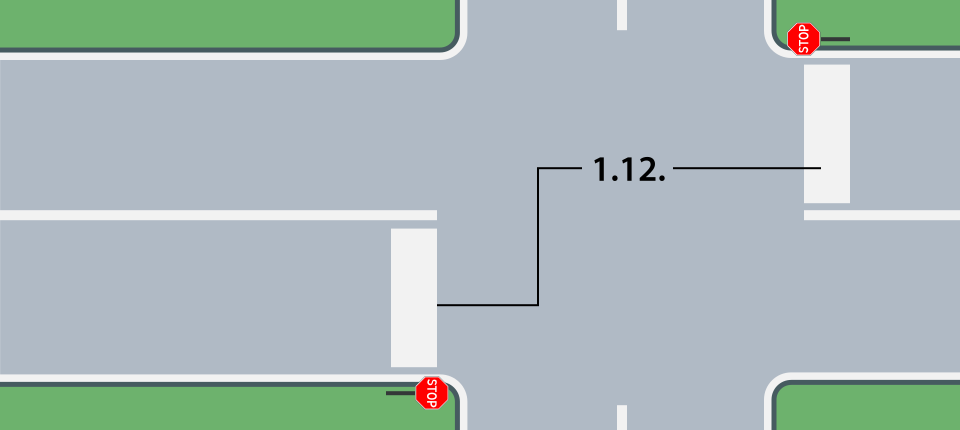
The "stop line" shows the place where the driver must stop when sign 2.5 is present, or at a prohibiting signal of a traffic light or traffic controller.
Translated from the official Georgian text.
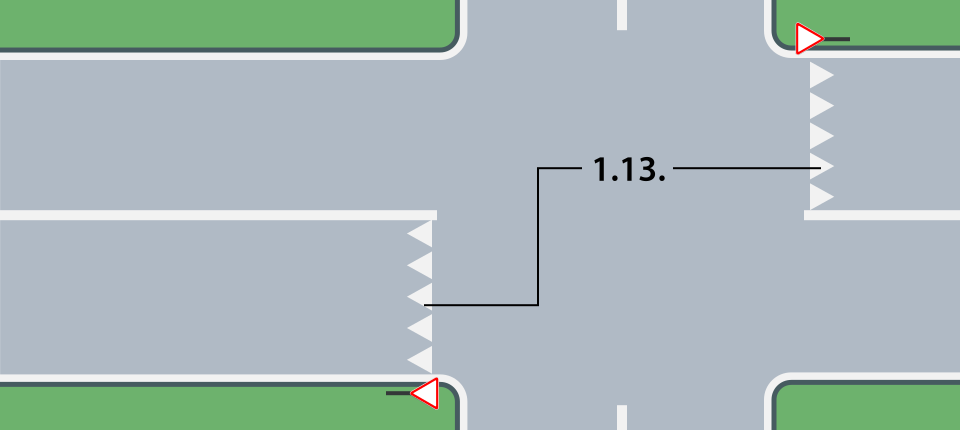
Shows the place where the driver must, if necessary, stop and give way to vehicles moving on the intersecting road.
Translated from the official Georgian text.
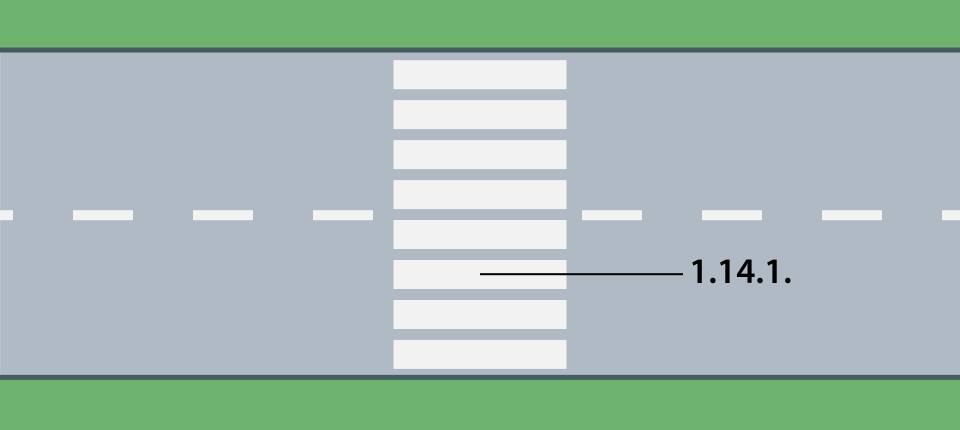
The "zebra" marks an uncontrolled pedestrian crossing;
Translated from the official Georgian text.
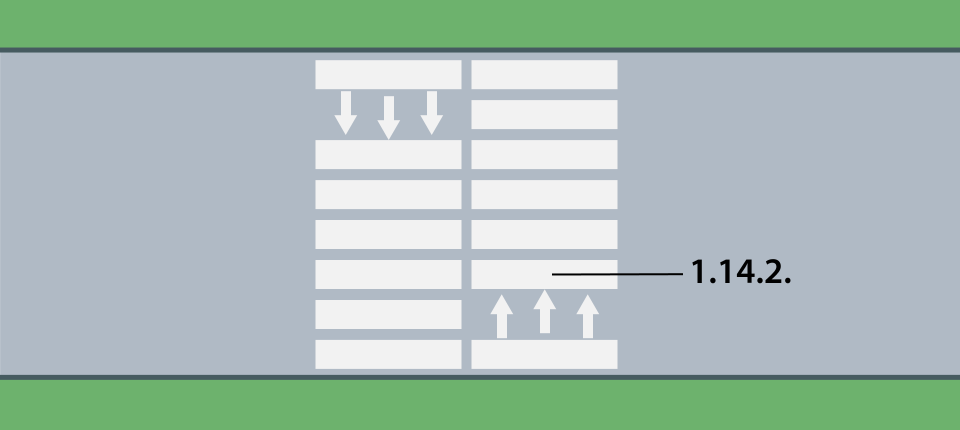
The "zebra" marks an uncontrolled pedestrian crossing; the arrows of marking 1.14.2 show the direction of pedestrian movement.
Translated from the official Georgian text.
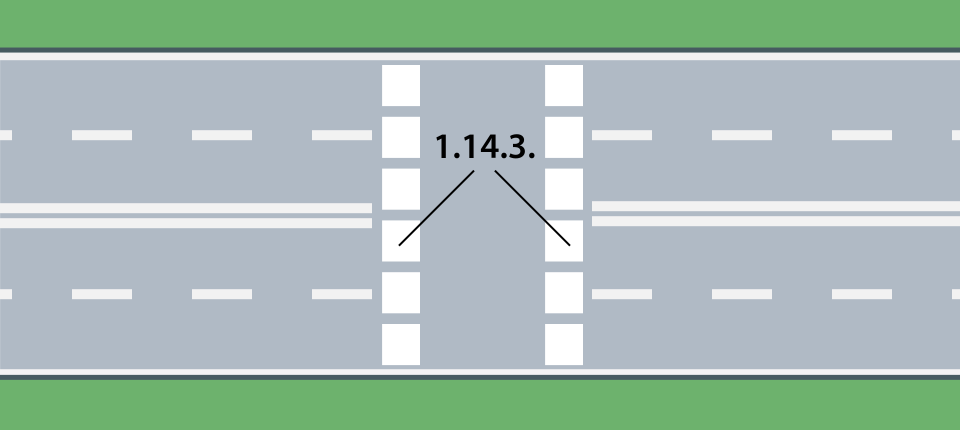
Marks a pedestrian crossing where traffic is controlled by a traffic light.
Translated from the official Georgian text.
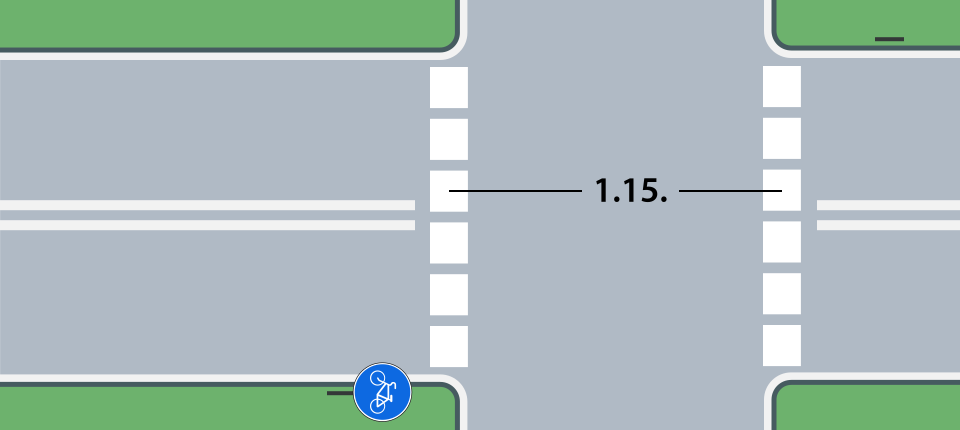
Marks the place where a cycle track crosses the carriageway.
Translated from the official Georgian text.
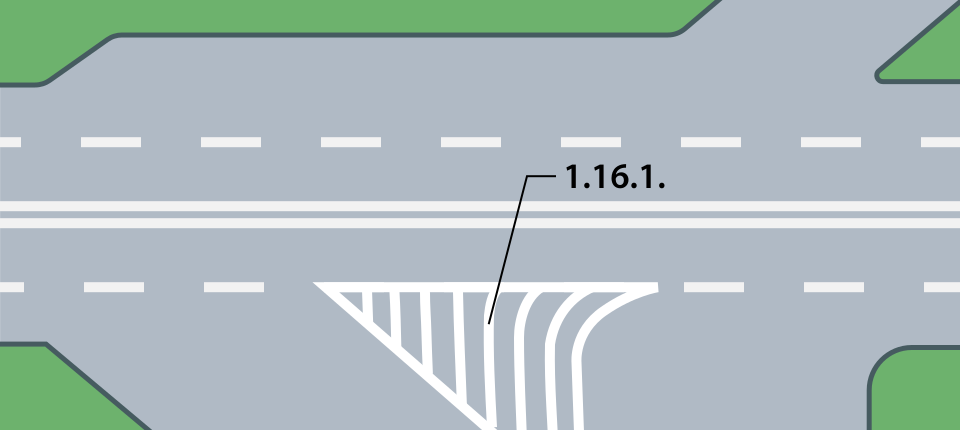
Marks guide islands at places where traffic flows split or merge.
Translated from the official Georgian text.
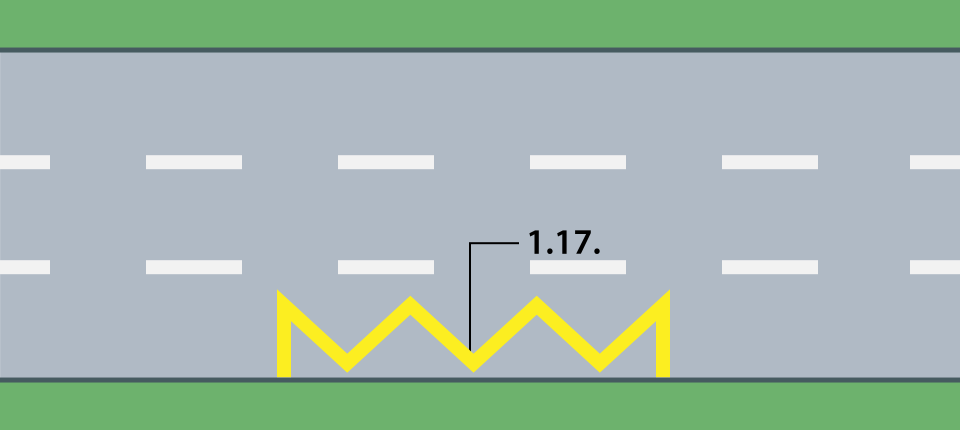
Marks stops of route vehicles and taxi ranks.
Translated from the official Georgian text.
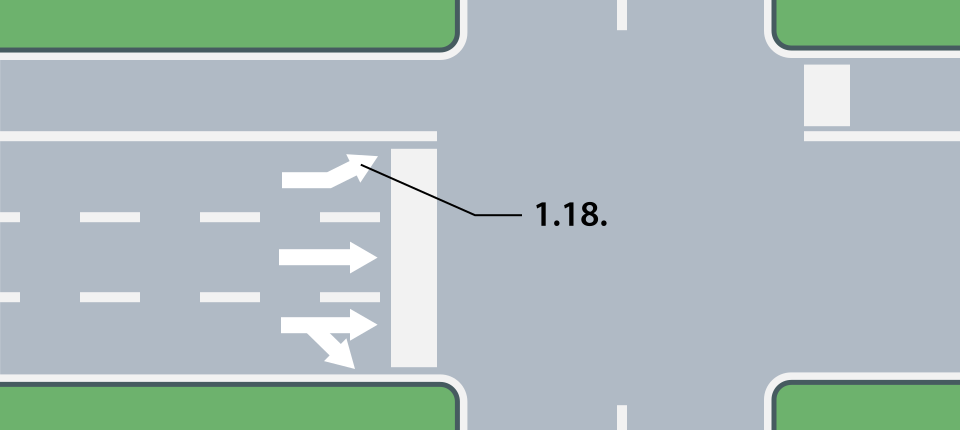
Marks the permitted directions of movement in the lanes at an intersection; it is used on its own or in combination with signs 5.8.1, 5.8.2; marking with a dead-end symbol indicates that turning onto the nearest carriageway is prohibited; marking that allows a left turn from the far-left lane also allows a U-turn from that lane.
Translated from the official Georgian text.
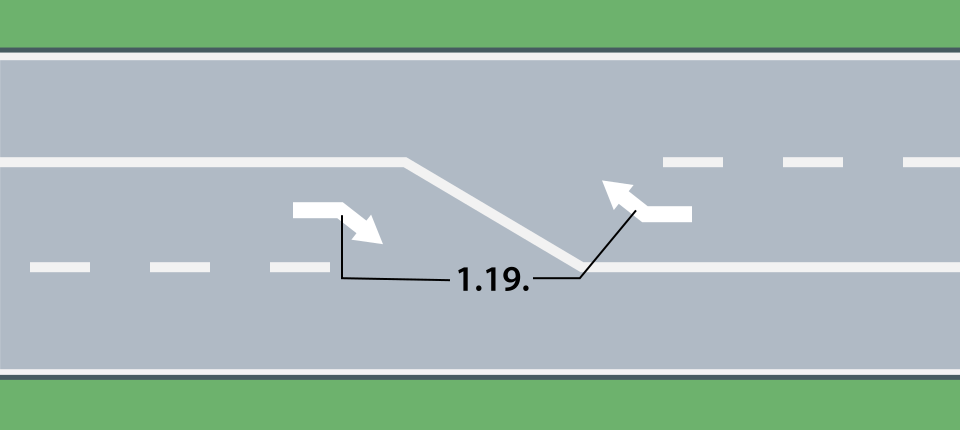
Warns of approaching a narrowing of the carriageway (a section where the number of traffic lanes in the given direction decreases) or marking 1.1 or 1.11 that separates traffic flows moving in opposite directions. In the first case, marking 1.19 may be used in combination with signs 1.18.1–1.18.3.
Translated from the official Georgian text.
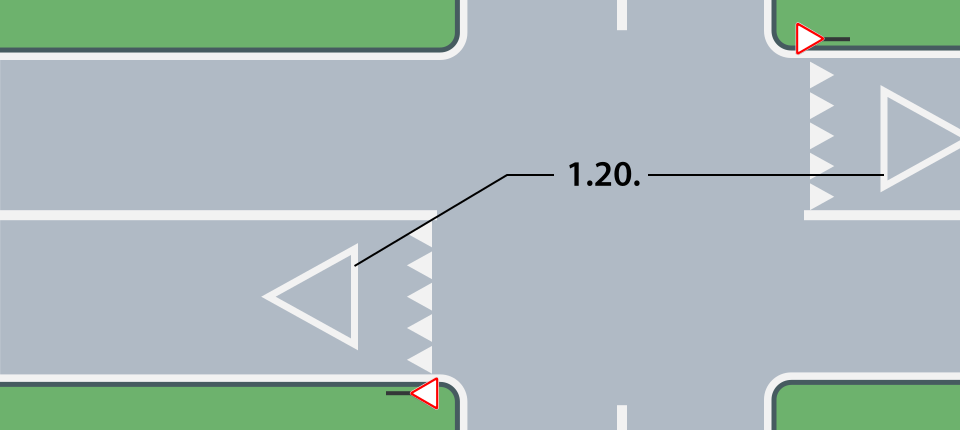
Warns of approaching marking 1.13.
Translated from the official Georgian text.
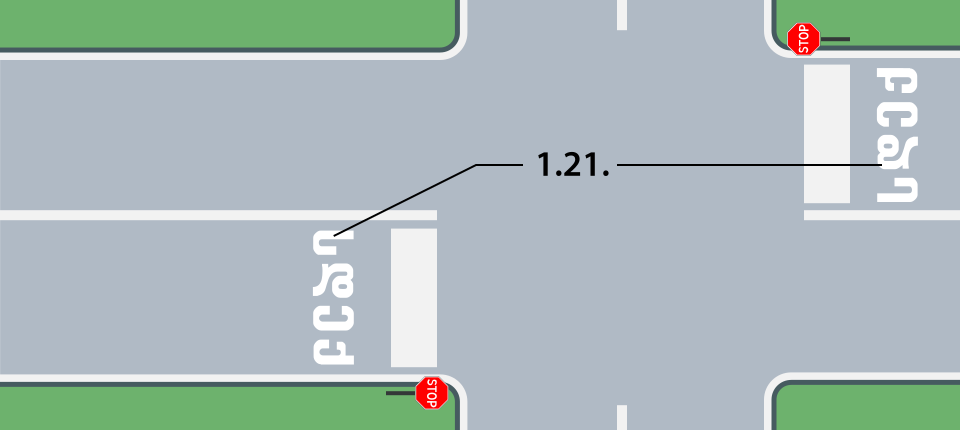
The inscription "STOP" warns of approaching marking 1.12 when it is used in combination with sign 2.5.
Translated from the official Georgian text.
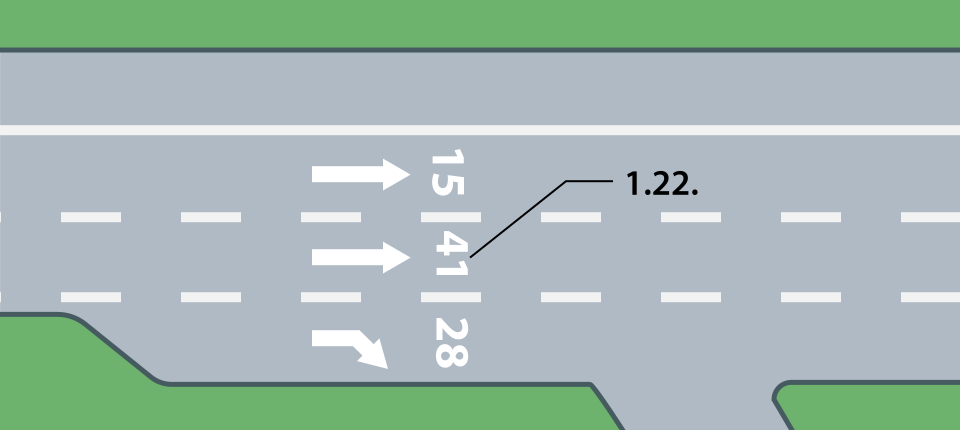
Shows the road (route) number.
Translated from the official Georgian text.
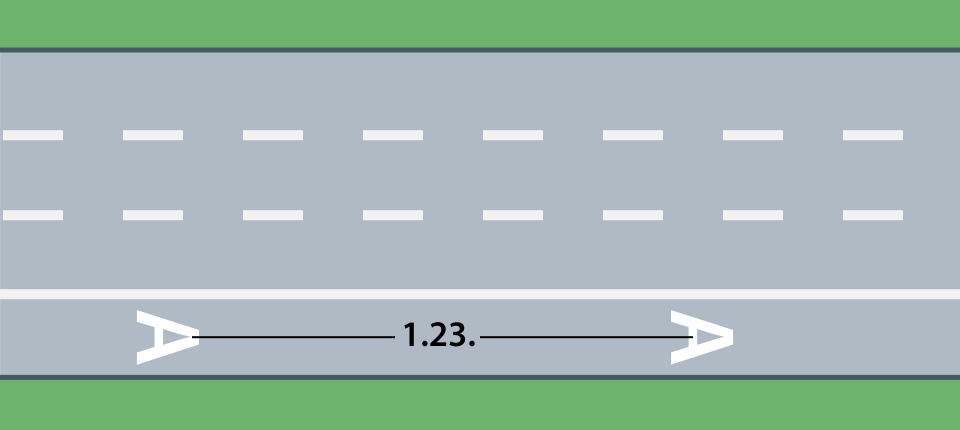
Marks a special lane intended for the movement of route vehicles.
Translated from the official Georgian text.
Sign questions come up often in the exam. Practise on real tickets — tap a sign number in a ticket explanation to see the sign right there.
Go to tickets →